
Understand Echols County Releases
Release in Echols County is a change in custody status, not the erasure of an arrest or court case. The Echols County Sheriff's Office keeps the local arrest and incident side of the record. Yet its jail information page says every person arrested by the office is transported to Lowndes County Jail. Lowndes therefore holds the booking, jail bond, custody, and physical release information in many Echols cases. The court file remains in Echols when the local court handled the charge.
The official Echols County jail information page documents that out-of-county housing rule.
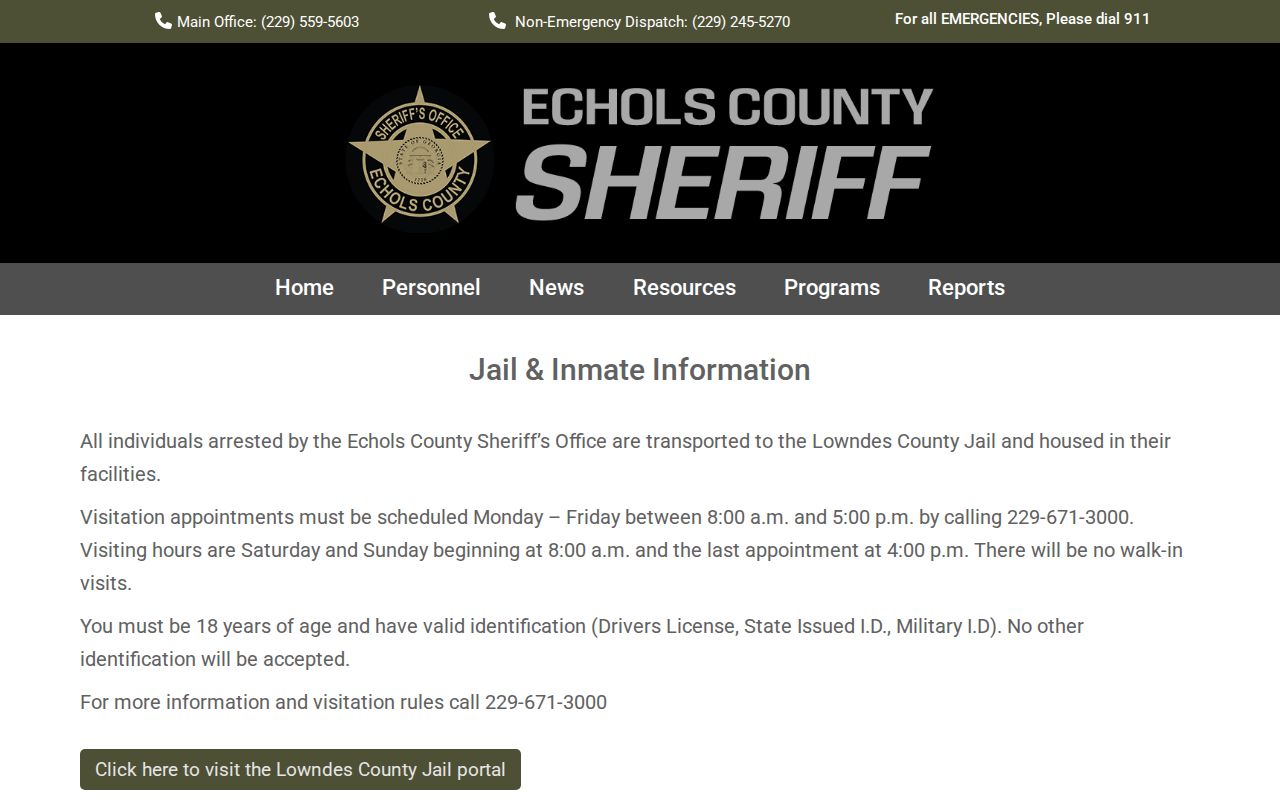
The source screen confirms why an Echols release search must follow the booking into the Lowndes jail system.
A person can leave Lowndes custody on bond, after time served, under a court order, or because a charge was dismissed. Someone may also leave that jail through a transfer to the Georgia Department of Corrections, another county, federal authorities, or immigration custody. A transfer is a release from one facility, but it does not mean the person is free. Parole is a prison release under conditions. Probation is a court sentence served in the community, sometimes after a jail or prison term. Discharge means the correctional or supervision obligation has ended.
How Echols County Inmates Leave Custody
The release label determines which office can explain what happened next. Lowndes County Jail may record the event that ended its custody, while an Echols court order supplies the legal reason. State and federal transfers create a new custody trail. These outcomes should not be treated as interchangeable.
| Release type | Meaning and next record |
|---|---|
| Bond | The person leaves pending court under bond terms. Check Lowndes Jail Bond Records and the Echols court case. |
| Time served or sentence end | Custody credit or the imposed term is complete. Confirm with the jail record and sentencing court. |
| Dismissal or court order | A judge or prosecutor changes the case posture. The court disposition explains the jail release. |
| Parole or probation | The person lives in the community under state or court conditions. Check Board and DCS records. |
| Transfer or detainer | Lowndes custody ends because another authority takes custody. Request the destination entry rather than assuming freedom. |
“Time served” means that credited time satisfies the custody term. A detainer is a request or hold from another authority. Neither a missing roster entry nor a bond entry alone proves that every other warrant or hold has cleared.
View Echols County Release Records
An Echols release inquiry often needs two linked records. The Lowndes booking file shows the custody event because Echols arrestees are housed there. The Echols arrest report and court case identify why the person entered custody and what happened to the charge. Georgia VINE can add a recent status signal, but it is not the certified sentence or disposition record.
| Field | What it shows |
|---|---|
| Name and identifiers | Connect the correct person to the booking and reduce common-name errors. |
| Booking or case reference | Links the jail stay to bond, charge, and court records. |
| Release date and time | Marks when Lowndes physical custody ended, if recorded and public. |
| Release reason | May distinguish bond, court order, time served, transfer, or sentence completion. |
| Receiving authority | Shows whether another county, GDC, federal agency, or ICE took custody. |
| Bond and charge data | Provides context, but does not replace the final court disposition. |
Echols Sheriff's monthly arrest reports are narrower. Sample reports include arrest date, name, age, residence, and charge summary. They do not state a release date, release type, booking photo, or bond amount. Use them to identify the arrest event, then move to Lowndes custody records and the court file.
Request Echols County Release Records
Ask the office that created the part of the record needed. A Lowndes request should describe the booking, bond, custody, release date and time, release reason, destination, and booking photo if relevant. An Echols request should focus on the arrest or incident report. Include a full name, approximate arrest date, known case number, and a precise date range.
- Search the Lowndes Public Access portal for Jail Records and Jail Bond Records.
- Write down the name, event date, case number, and any booking reference shown.
- Send the Lowndes form by email to sorecords@lowndescounty.com, fax to 229-333-5141, or mail it to 120 Prison Farm Road, Valdosta, GA 31601.
- Use the Echols Sheriff's open-records form for the matching arrest or incident material.
- Ask the Echols clerk for the disposition when the legal reason for release is still unclear.
The Echols form lists search and retrieval at $19.55 per hour after the first fifteen minutes, plus $0.10 per paper copy or redacted page. It says an estimate will be given when expected costs exceed $25 and production may wait for agreement to pay. The form asks users to allow at least three business days for research and five business days for mailing. Lowndes also provides the first fifteen minutes without charge under O.C.G.A. § 50-18-71.
Echols County Release Record Limits
Georgia's Open Records Act provides the request framework, including the fee mechanics cited by both sheriff forms. Public access is not absolute. Juvenile, sealed, restricted, confidential, or lawfully redacted material may be withheld. Record restriction in Georgia changes access to eligible criminal-history information; it does not mean every jail, court, or news record vanishes at once. A court order and the originating agency's rules control what is restricted.
Retention is another issue. Neither Echols nor Lowndes published a clear online window for how long a released booking remains visible. Do not treat disappearance from an active view as proof of sealing or dismissal. Preserve the search identifiers and request the historical custody record. The court disposition is often the better source for the lasting legal result.
Check Echols County Bond Releases
Bond-out searches have a county-specific first stop. Echols links users to Lowndes Public Access, whose landing page separates Jail Records from Jail Bond Records. Search both. A bond entry can show why Lowndes released the person pending court, but it does not show that the Echols charge ended. The Superior Court or Magistrate Court file supplies the next hearing, conditions, and later disposition.
If the name is absent, call Lowndes County Jail at 229-671-3000 or the sheriff contact line at 229-671-2900. Ask whether the person remains in custody, was released, or transferred, and which record can confirm it. Keep the question limited to custody status and record access.
Find Released Echols County Inmates
The best search uses a custody source plus a court or supervision source. That pairing separates a physical release from the legal outcome and prevents a transfer from being mistaken for freedom.
The Lowndes County Public Access landing page is the official online entry for jail and bond records.
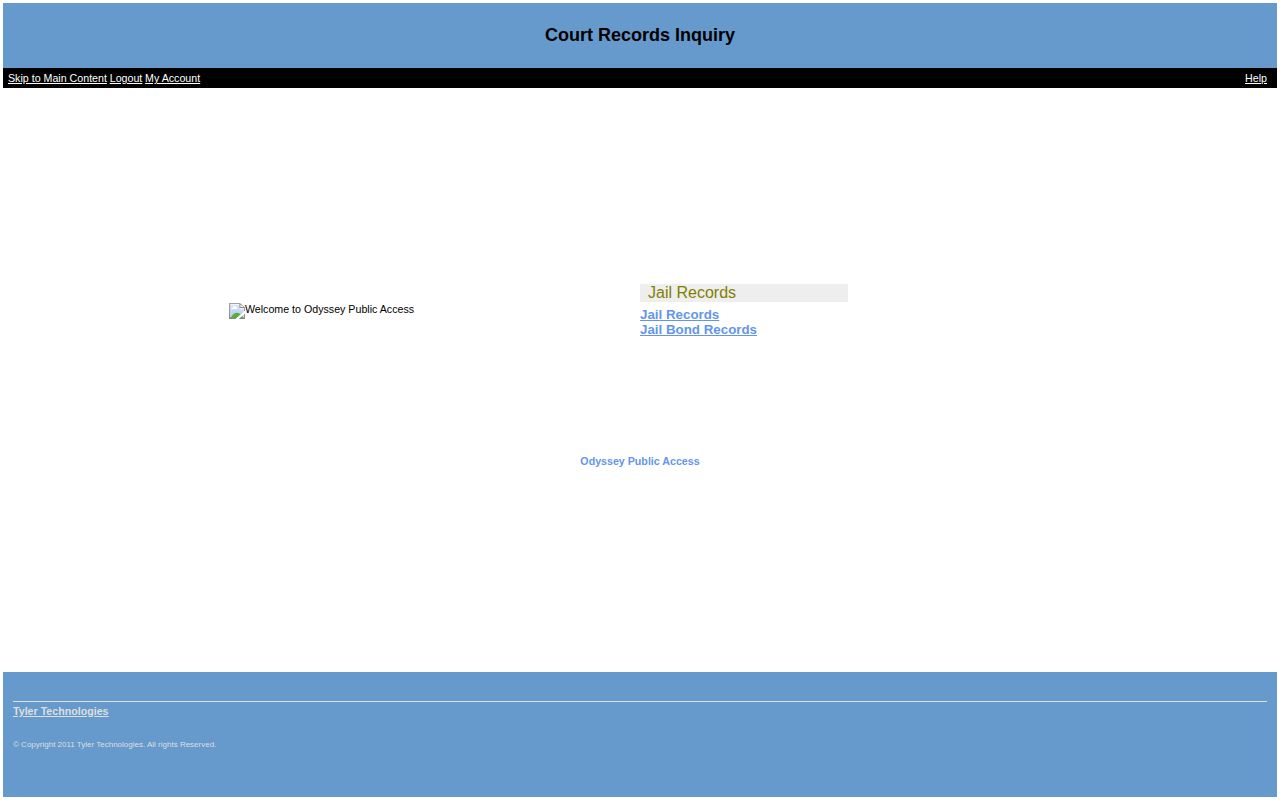
This portal is the online starting point, but phone and written records requests remain necessary when a released booking is no longer visible.
- Confirm on the Echols jail information page that local arrestees are housed in Lowndes.
- Search Lowndes Jail Records and Jail Bond Records for the named person.
- Call the jail when the portal has no current or prior match.
- Check Georgia VINE for a recent custody status or release alert.
- Read the Echols court disposition for bond, dismissal, sentence, probation, or transfer.
- Use GDC only when the person entered state prison, BOP for a federal sentence, or ICE ODLS when an immigration transfer is suspected.
- Request the release record if no online source settles the question.
The Echols County 24-hour releases guide explains the same-day fallback when no official feed exists. It is useful for a time window, while this process is built to verify one named person across present and past records.
Search GDC Echols County Releases
The Georgia Department of Corrections system applies to state offenders, not an Echols arrestee who only stayed in Lowndes County Jail. Georgia.gov says adults may be searched by name, ID or case number, age, and other identifying details. GDC records can provide a facility location, charges, and release date. Photographs display when available.
| Search route | Use |
|---|---|
| Name and age | Start when no GDC identifier is known. |
| GDC ID | Narrow the result to a known state offender. |
| Case number | Connect the state record to a prosecution. |
| Release date and location | Read the state custody result, then check supervision if release has occurred. |
GDC warns that its online information may be incomplete and directs written verification to Inmate Records and Information, PO Box 1529, Forsyth, GA 31029. A Tentative Parole Month is different from a release date. It marks a Board review month and may change due to conduct, programs, or a later Board decision.
Browse Echols County Recent Releases
No official Echols 24-hour or 72-hour release feed was found. No distinct Lowndes 72-hour feed was documented either. The official online fallback is the Lowndes Public Access jail portal. Its exact update cadence and retention window are not published, so a missing result must be checked by phone or records request.
The regional scale helps explain the route. Lowndes reports that its jail operations supervise an average of 700 inmates each day, while Echols posts small periodic arrest-report PDFs. That does not mean Echols holds 700 people. It shows why local arrest information can be in Echols while the larger custody system and release event are in Lowndes.
Does an Echols arrest report prove release? No. The report identifies an arrest and charges. The Lowndes custody record and Echols court disposition answer whether and why the person left jail.
Trace Echols County Release Cases
The local record trail is regional: arrest in Echols, jail in Lowndes, court in Echols, and felony supervision through a Valdosta office. GSCCCA lists Echols Superior and Juvenile court records under the Echols clerk in Statenville. Probate and Magistrate Courts handle many warrant, bond, preliminary, and lower-level matters. Court records can explain whether the release followed bond, dismissal, time served, probation, or a state-prison sentence.
For a state sentence, the conviction file also matters when jail-time credit or sentence computation seems wrong. GDC advises an inmate to speak with a counselor and use the grievance process; the clerk in the county of conviction may need to confirm the sentencing record. This is why one portal rarely supplies the full answer.
Verify Echols County Post-Release Supervision
Georgia separates parole decisions from community supervision. The State Board of Pardons and Paroles sets parole decisions and runs the Inmate TPM Lookup and Parolee Database. The Department of Community Supervision supervises felony probationers and parolees. Its Valdosta Field Office serves Echols, Brooks, Lowndes, and the Southern Circuit.
Search the Parolee Database for a person already on parole. Contact DCS when the question concerns active community supervision. A person released from jail on a local misdemeanor probation term may have a different supervising provider, so confirm the sentencing court. The Echols County post-release supervision guide separates these paths and explains warrants, violations, and discharge.
Funds After an Echols County Release
Property and funds follow the custody system that held them. Local jail property questions belong to Lowndes County Jail when the person was housed there. Georgia state-prison funds follow a different process. GDC says money left on a state offender's books transfers to a Georgia release card for use after release. That state process does not describe local property pickup at Lowndes.
Ask the releasing facility about any unclaimed property, documents, or funds. Do not send a state-prison account question to the Echols Sheriff's Office merely because the original case began in Echols. Matching the request to the custodian is the fastest route.
Check Echols County Release Alerts
Georgia VINE is the statewide custody notification channel. It can help check a specific person and register phone, email, text, or in-app alerts. Because Echols arrestees are held in Lowndes, the useful data feed is likely tied to that housing system. A VINE release result is a status clue, not the certified court disposition or sentence-completion record.
Federal and immigration cases use separate systems. BOP records from 1982 forward can show a federal release date and a “Released” or “Not in BOP Custody” result. ICE ODLS locates people in current ICE custody or CBP custody beyond its covered period. If someone leaves Lowndes and an ICE hold is suspected, request the release or transfer destination from the jail instead of assuming where the person went.
Compare Echols County Custody Records
Choose the system by custody type and time. A live tool answers a different question from a historical record.
| Situation | Best first source | Confirm with |
|---|---|---|
| Held now after an Echols arrest | Lowndes jail portal or phone | Georgia VINE |
| Released from Lowndes | Lowndes release or bond record | Echols court disposition |
| Released from state prison | GDC offender search | GDC records, Board, or DCS |
| Released from federal prison | BOP Inmate Locator | Federal court or probation record |
| Possible immigration transfer | Lowndes transfer record and ICE ODLS | ICE contact route |
A two-source match is strongest: custody plus court, or state release plus supervision. Always compare identifiers and dates before deciding two records describe the same person.
Access Echols County Release Systems
Echols County Jail is the sheriff's local arrest and records point, while Lowndes County Jail physically houses Echols arrestees. GDC covers state sentences. DCS and the State Board cover supervision and parole decisions. Courts explain case outcomes, and BOP or ICE tools apply only to their own custody systems.
- Echols County Jail: local arrest and records origin, not an Echols live housing roster.
- Lowndes County Jail: booking, bond, custody, and physical release point for Echols arrestees.
- Georgia Department of Corrections: statewide offender and discharge path.
- Echols County Superior Court: sentence and disposition record.
- Federal Bureau of Prisons and ICE: separate federal or immigration custody checks.
Start with the system that actually held the person. Then use the related court or supervision record to explain what the release meant.