
Echols Court Release Meaning
Echols County Superior Court does not operate a jail or physically release a person. Its criminal file can explain the legal event behind a release from Lowndes County Jail, where the Echols County Sheriff says local arrestees are housed. A docket or filed order may show that bond was set, a charge was dismissed, a plea was entered, a sentence was imposed, time served was credited, probation began, or a person was transferred into state custody. The custody record and court record answer different questions. Lowndes jail records show when a person left that jail. The Echols court file can show why the change occurred and what legal duties remained.
A bond release does not end a criminal case. Someone may leave Lowndes County Jail while an Echols Superior Court case remains pending. A dismissal can end a charge, but the clerk's filed disposition is stronger proof than disappearance from a jail roster. A sentence may lead to probation in the community or transfer to the Georgia Department of Corrections. For that reason, a court result should be read beside the custody record rather than treated as a stand-alone live locator.
Use Lowndes records to confirm the jail exit, then use the Echols Superior Court file to identify the order, bond, disposition, or sentence behind it.
Confirm an Echols Release
The strongest method uses two sources. Begin with the Echols County released-inmate search path to identify whether the person was held locally, entered state prison, or moved to another authority. An Echols arrest that stayed within the local court system usually requires Lowndes custody data plus an Echols court disposition. A state-prison sentence requires the GDC offender search as well. Federal custody belongs in the BOP locator, and an immigration transfer belongs in the ICE locator. The Superior Court clerk cannot replace those custody systems.
- Confirm that the arrest or prosecution belongs to Echols County. Gather the full name, approximate arrest date, charge, and case number if known.
- Check the Lowndes Public Access jail and bond records or ask the Lowndes records office for the booking and release event.
- Ask the Echols Clerk of Superior Court for the docket and filed disposition, bond order, sentencing order, or other public document tied to that case.
- If the order sent the person to state custody, check GDC for present status and release data. If it imposed felony supervision, use DCS or the state parole system.
- Compare names, dates, and case identifiers across the sources. Resolve a conflict with the office that created the disputed record.
Georgia VINE may provide a custody-change alert, but it is not a certified disposition. An Echols sheriff arrest report can help identify the arrest date and charge, yet sampled reports do not contain release dates or release reasons. Neither source replaces the filed court order when the reason for release is the point that needs proof.
Echols Court Records Contact
The GSCCCA Echols clerk listing identifies Nora L. Rogers as Clerk of Superior Court. The clerk manages Superior and Juvenile court records. Contact the office before a visit when a certified copy, older file, or restricted record is involved.
Echols County Clerk of Superior Court
110 Highway 94 East
P.O. Box 213
Statenville, GA 31648
Phone: 229-559-5642
Fax: 229-559-5792
Hours: Monday through Friday, 8:00 a.m. to noon and 12:30 p.m. to 4:30 p.m.
The county Superior Court page describes the clerk as the office responsible for maintaining court records and supporting the orderly handling of court business. Ask for a specific document rather than an open-ended account of a person. A useful request identifies the case, defendant, approximate filing date, and the exact item needed, such as the final disposition or sentencing order.
The official county page is shown below so the court identity and local source are clear.
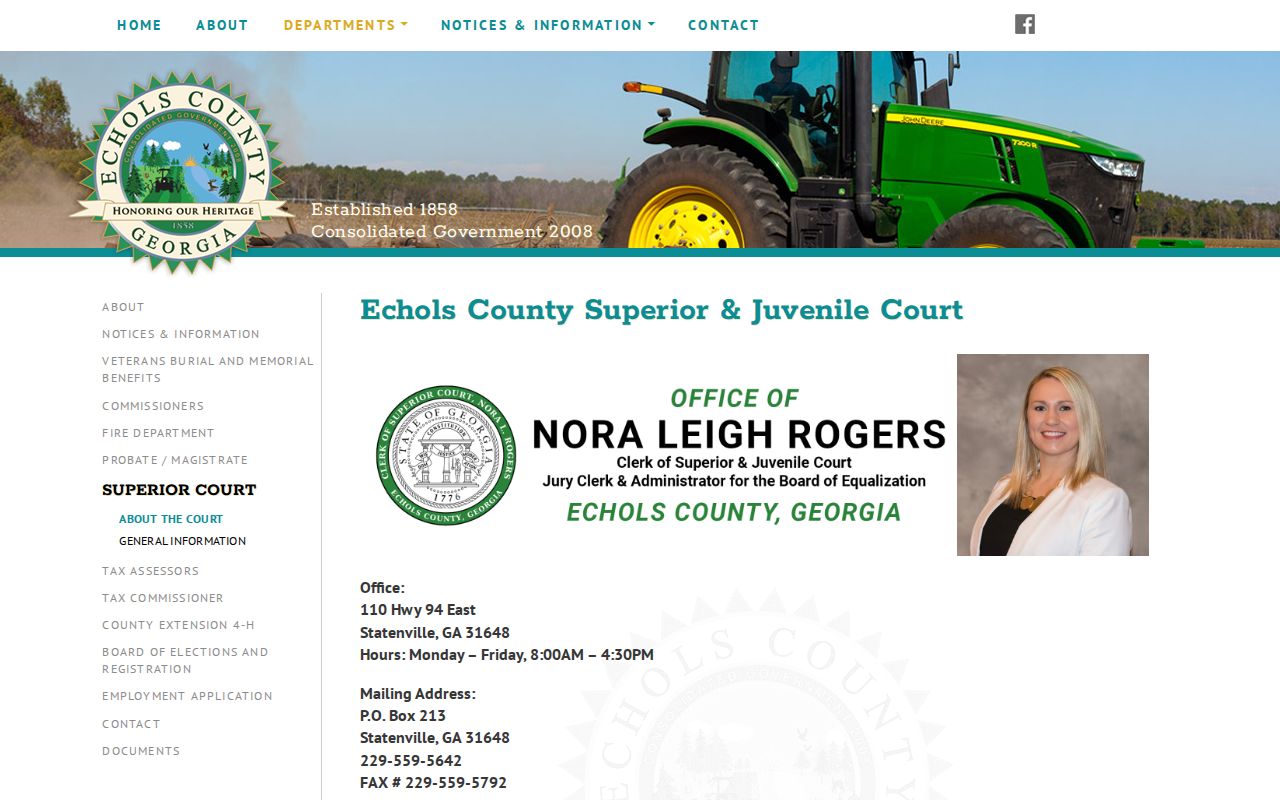
The page is a contact and office reference, not a live jail roster or a promise that every criminal document is available online.
Echols Court Record Types
A release inquiry becomes more useful when it names the right record. The docket is a chronological index of case activity. A bond order may state the conditions under which a person could leave jail while the case continued. A dismissal or final disposition records how a charge ended. A plea and sentence can show confinement, probation, credit for time served, fines, or transfer to state custody. A certified copy is a clerk-issued copy used when ordinary portal information is not enough for a formal court or legal process.
| Record | What it can explain |
|---|---|
| Docket | Dates and sequence of filed case events |
| Bond order | Authority and conditions for release before final disposition |
| Disposition | Dismissal, plea, conviction, or other outcome |
| Sentencing order | Custody, time served, probation, or state-prison terms |
| Certified copy | Clerk-validated form of an eligible court document |
A court sentence should not be confused with a jail's processing time. Even after a judge signs an order, jail staff may need to verify holds, complete records, and determine whether another authority has a lawful basis to keep the person. The filed order explains legal authority, while the custodial office confirms the actual time and destination of release.
Georgia Court Access Options
Georgia court access is divided among local clerks and several portal providers. The Georgia Courts e-access page directs users toward participating services and notes that an account may be needed. PeachCourt supports document access and electronic filing for participating civil and criminal courts. re:SearchGA advertises case information and documents across participating counties. Coverage, available document types, and fees can differ, so a missing online result is not proof that no case exists.
Start with the clerk when the portal does not clearly cover Echols County, the case is older, the spelling may differ, or the document must be certified. Juvenile files and records made nonpublic by law will not become public merely because a portal exists. A clerk may also need a case number or more precise identifiers to distinguish people with similar names.
The PeachCourt screen below is one possible Georgia access channel.
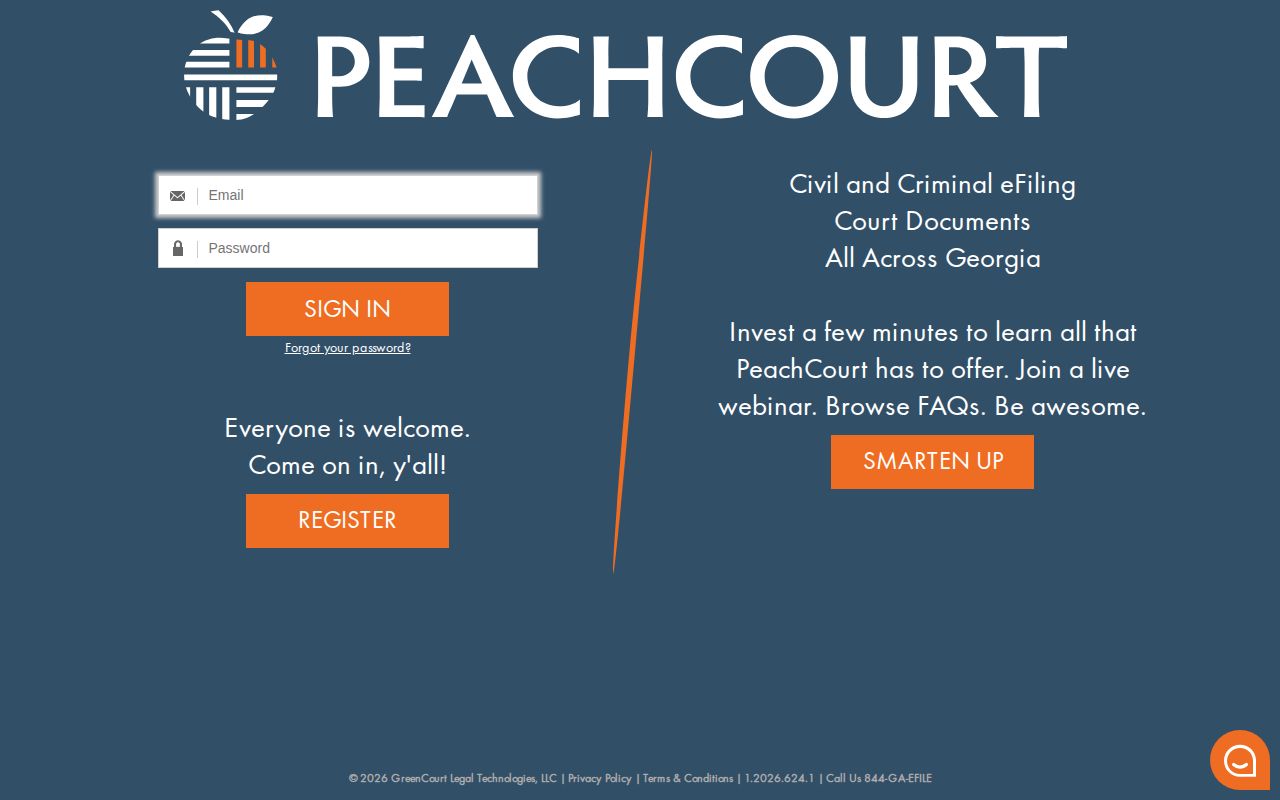
Portal results should be checked against the Echols clerk's record when the outcome or sentence affects release confirmation.
Certified Echols Court Copies
When a plain docket entry is not enough, ask whether the clerk can issue a certified copy. GSCCCA describes its eCertification Portal as a way to request digital certified records from participating Georgia court systems. Its certified PDFs are designed to be tamper-proof and self-validating. Availability still depends on the participating clerk and the document's public status.
A request should identify the exact item needed. For release-related proof, that may be the order setting bond, final disposition, sentencing order, or an order showing time served. Do not ask the clerk to infer the current location of a person from an old order. Pair the certified court document with a current custody record from Lowndes, GDC, BOP, or ICE when current location remains in question.
The date filed and the date an event took effect may not always answer the same question. Ask the clerk what the document says rather than assuming a docket date is the physical release date. For example, a signed bond order can authorize release, but Lowndes County Jail remains the source for completion of jail processing. A sentencing order can award credit for time already served without stating the hour that custody changed. Keeping those dates separate prevents a court document from being stretched beyond its purpose.
Copies also vary in form. An informational portal view may be enough to locate a case, while a certified order is more suitable when the authenticity of the filed document matters. Ask the clerk about the available format, any lawful access limit, and the method for obtaining it. The research does not publish a fixed Echols court-copy price, so no fee should be assumed before the office provides one.
Restricted Echols Court Records
Not every record is open through an ordinary name search. Juvenile matters, sealed files, restricted records, First Offender material, and information protected by other rules may be absent or partly redacted. That absence should not be described as proof that an arrest never occurred or that a person was never released. It only shows that the searched public channel did not return a usable result.
Record correction also follows the source. Ask the clerk about an error in a court disposition. Ask Lowndes jail records about an incorrect booking or custody event. Ask GDC about a state sentence or release-date issue. Public access and record restriction are legal processes, and no court page can promise removal from every outside copy or search service.